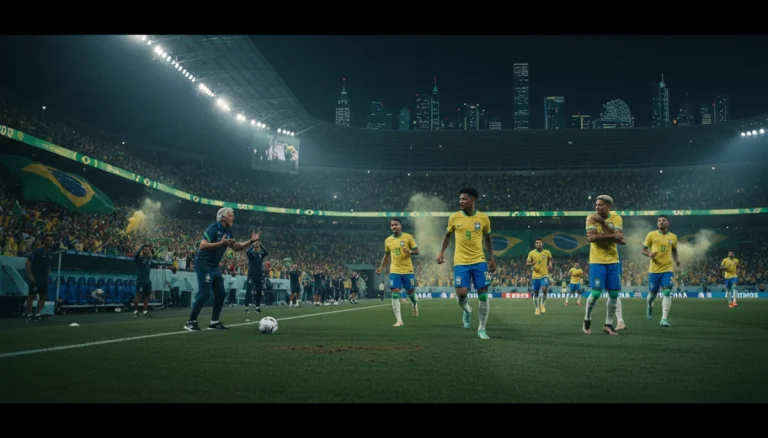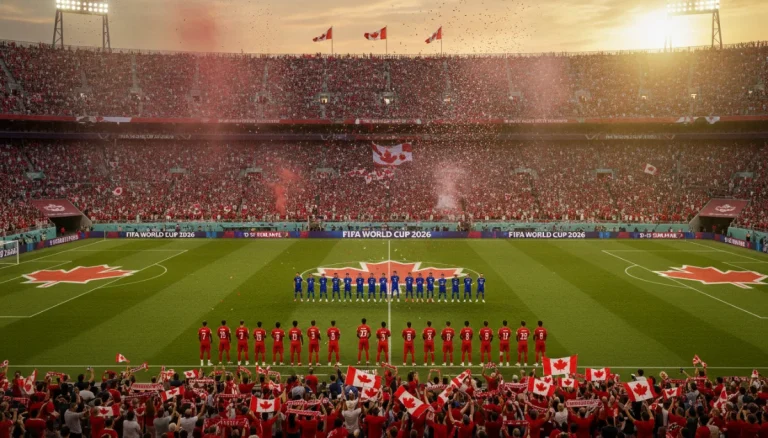

The 2026 FIFA World Cup is officially underway, and Canada is taking part in a moment that has been decades in the making. For the first time, the country is helping open soccer’s biggest tournament, joining the United States and Mexico in a three-nation celebration that stretches from June 11 to the final on July 19 in New York.
That alone makes this year unlike any previous edition. The tournament will feature 104 matches across 16 host cities, and Canada’s share of the spotlight arrives in Toronto, where the national team will step onto home soil for a landmark occasion.
Toronto Takes Center Stage
Canada’s opening ceremony is set for June 12 at Toronto Stadium, with the show beginning at 1:30 p.m. local time, or 17:30 GMT. Organizers have built the program around the idea of a cultural mosaic, using music and performance to reflect the country’s range of voices and backgrounds.
The performance is expected to run for about 13 minutes and open with a countdown that moves “from coast to coast to coast.” The message is simple: this is a celebration not just of football, but of the country hosting it.
The lineup brings together a mix of Canadian and international artists. Among the performers expected are Alanis Morissette, Alessia Cara, Jessie Reyez, Michael Bublé, and William Prince, alongside Elyanna, Nora Fatehi, Sanjoy, and Vegedream.
FIFA President Gianni Infantino described the ceremony as a reflection of Canada’s identity and called it a moment of pride, unity, and anticipation as the country takes its place on the world stage.
What Happens After the Ceremony
The ceremony is only the beginning. Right after the celebration, Canada’s men’s national team will face Bosnia and Herzegovina in the country’s first-ever World Cup match played on home soil. Kickoff is scheduled for 3 p.m. local time, or 19:00 GMT, after the usual pre-match routines and player introductions.
For Canadian supporters, the timing makes the day even more meaningful. A home World Cup appearance has long felt distant, and now the team gets to begin the tournament with a crowd in Toronto behind it.
- The opening ceremony begins at 1:30 p.m. local time in Toronto.
- The show lasts roughly 13 minutes and centers on Canada’s diversity.
- Canada then plays Bosnia and Herzegovina in its first home World Cup match.
- The tournament continues across three host nations through July 19.
A Shared Opening Across Three Countries
Canada’s celebration is part of a larger sequence of ceremonies across North America. The three host nations are linking their opening moments through one theme: football’s ability to connect people across borders. The productions are led by Marco Balich, whose experience includes major Olympic opening ceremonies.
Each country is presenting a different visual identity. Canada is emphasizing its cultural mosaic, Mexico is using the traditional paper art of papel picado, and the United States is focusing on what Balich described as “a super shiny, glowing cup.” Each ceremony begins 90 minutes before the host nation’s first match.
The first celebration happens in Mexico City on June 11 at Mexico City Stadium, formerly Estadio Azteca. That ceremony is the longest of the three, running about 16 and a half minutes, and it includes Indigenous performers, folkloric acts, and a major music lineup featuring Shakira, Alejandro Fernández, J Balvin, Maná, and Tyla. Authorities have also declared June 11 a public holiday in the capital, with schools closed and remote work encouraged.
The U.S. ceremony follows on June 12 at Los Angeles Stadium before its match against Paraguay. That event includes global names such as Katy Perry, Future, Anitta, LISA, Rema, and Tyla.
How Fans in Canada Can Watch
Canadian viewers can follow the ceremonies and matches on CTV and TSN, with French-language coverage on RDS. In the United States, coverage is set to air on FOX, FS1, and the free streaming service Tubi, while viewers in the United Kingdom can watch through the BBC and ITV.
That means the opening stretch will unfold in a nearly continuous rhythm across the continent, beginning with Mexico on June 11 and carrying into the Canada and U.S. events on June 12.
Toronto Prepares for a Busy Day
Toronto organizers are expecting a surge of visitors and are adding transit service to help manage the crowd around the stadium. Security, traffic flow, and logistics are all being treated as top priorities as the tournament begins.
Other host cities are also dealing with their own challenges. In Mexico City, protests by teachers’ unions have raised concerns about road disruptions near the stadium, although officials say the opening ceremony remains secure. In Los Angeles, organizers have focused on crowd management and have said they do not expect immigration enforcement at World Cup venues.
For Canada, the larger meaning is hard to miss. The ceremony is not just a pregame show; it is the first public sign that the country is hosting the sport’s biggest event and doing so in front of a worldwide audience.
As the national team walks out in Toronto, the moment will carry both symbolism and pressure. The stands, the stage, and the skyline all point to the same idea: Canada has arrived at the center of the game, and the summer ahead promises a very long run of attention, emotion, and football.