FIFA has opened the door to its official World Cup fantasy experience, and the launch arrives with Aramco as the presenting partner. Supporters can now assemble a 15-player roster and chase points across worldwide, continental, and national competitions while selecting from some of the sport’s biggest names.
The game is designed to reward both long-term planning and quick adjustments, giving fans a chance to manage a squad built for a tournament that is expected to stretch across multiple phases and high-pressure knockout rounds.

What Managers Need to Build
Success in the game starts with balancing star power, squad depth, and budget discipline. Each manager must fit a complete team into a fixed financial framework while staying within the player limits tied to the tournament format.
- Each squad must contain 15 players: 2 goalkeepers, 5 defenders, 5 midfielders, and 3 forwards.
- The starting budget is $100 million, with an extra $5 million added once the knockout rounds begin.
- Player prices stay locked, so values do not rise or fall during the competition.
- No more than three players from one country can be selected during the group stage.
- Unlimited transfers are allowed before the opening match and again before the Round of 32.
That structure makes early planning especially important. Because prices do not move, every selection carries more weight than in fantasy formats where managers can wait for market changes.
How Matchday Decisions Work
In active rounds, managers are not locked into a single lineup. Bench moves and captain changes can be made while the event is live, which creates room for tactical adjustments when injuries, surprise lineups, or breakout performances shift the picture.
The chip system adds another layer of strategy. Five special boosters are available across the tournament: Wildcard, 12th Man, Maximum Captain, Qualification Booster, and a Mystery Booster that will be revealed before the Round of 32.
Used well, those tools can turn a steady squad into a high-upside one. Used too early, they can leave managers exposed when the format becomes more demanding later in the competition.
How Points Are Earned
Points are tied to on-field production and a wide range of match events, so players can score through more than just goals. That makes the game appealing to managers who want to target reliable contributors in every area of the pitch.
- Minutes played
- Goals scored and goals conceded
- Assists
- Cards and own goals
- Penalties won or conceded
- Tackles, chances created, and shots on target
There are also bonus opportunities. Direct free-kick goals earn extra value, and a scouting bonus is awarded when a player owned by fewer than 5% of managers scores more than four points in a match.
Why That Bonus Matters
The scouting bonus encourages managers to look beyond the most obvious picks. In a global tournament, finding a low-owned player who produces in a key match can create a major edge in rank movement.
The Biggest Names Carry the Highest Prices
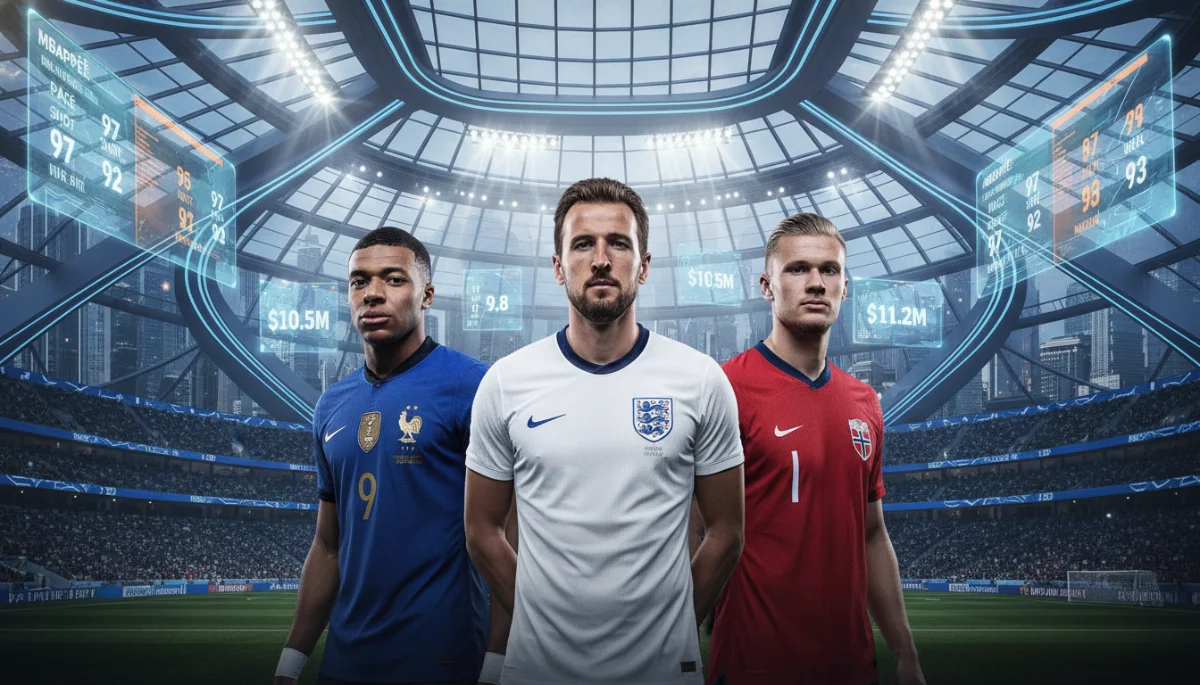
At the top end of the market, elite forwards are predictably expensive. Erling Haaland, Harry Kane, and Kylian Mbappe sit at $10.5 million each, while Lionel Messi and Cristiano Ronaldo follow at $10 million.
Among defenders, Portugal’s Nuno Mendes is the most expensive option at $5.8 million. In goal, the premium group includes Brazil’s Ederson and Alisson Becker, along with Spain’s David Raya and Unai Simon.
The pricing also reflects the strength of the leading football nations. Of the 25 most expensive players, 20 come from the top six countries in the FIFA/Coca-Cola Men’s World Ranking, with England and France offering five premium picks each.
Historical note: Kylian Mbappé won the adidas Golden Boot at the FIFA World Cup Qatar 2022™. The award began as the Golden Shoe in 1982 and was renamed in 2010 to honor the tournament’s top scorer, with second and third place receiving the Silver and Bronze Boots.
Value Picks Beyond Europe
The new Confederation Challenge Leaderboard gives added importance to players from outside Europe, since user selections will also be tracked by region. That means smart managers may want to spread their investments across multiple confederations instead of leaning too heavily on one talent pool.
- Africa: Mohamed Salah at $10 million and Omar Marmoush at $7.8 million are the leading names.
- Asia: Son Heungmin of South Korea is priced at $7.4 million, while Saudi Arabia’s Salem Al Dawsari is listed at $7.2 million.
- Host nations: Canada’s Jonathan David, Mexico’s Raul Jimenez, and the USA’s Christian Pulisic are all valued at $7 million.
- Oceania: New Zealand striker Chris Wood stands out at $6.5 million.
These prices show how the fantasy game tries to capture both superstar appeal and tournament balance. For managers, that creates a realistic challenge: fit headline players into a strict budget while still leaving room for regional diversity, reliable scorers, and timely chip usage.