
Why Bitcoin Dropped Below $64,000 on July 20
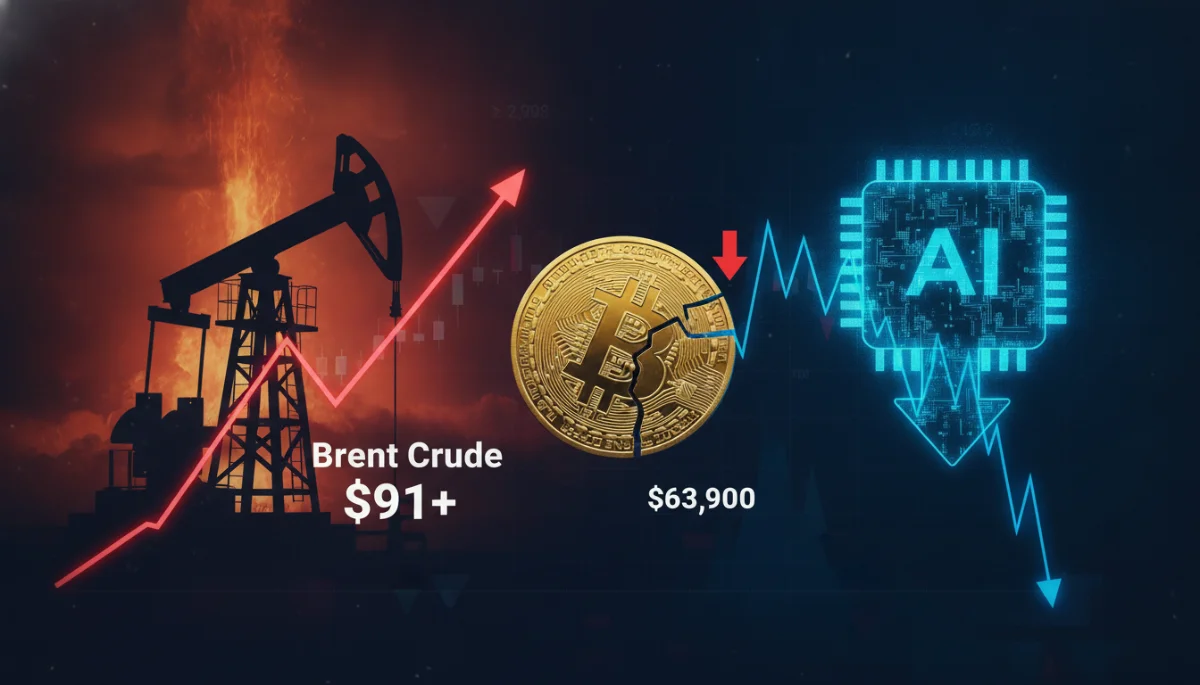
Bitcoin fell below the critical $64,000 threshold on July 20, 2026, closing at approximately $63,900 after a 1.3% daily decline . This price correction was not caused by a single event but rather a collision of two powerful negative forces: a surge in oil prices driven by geopolitical conflict and a sharp selloff in the artificial intelligence (AI) technology sector . Investors are currently navigating a “triple headwind” of macro caution, inconsistent institutional demand, and weak spot trading volume . The immediate trigger for the drop appears to be escalating military tensions between the United States and Iran, which have reignited fears of global inflation . As Brent crude oil climbed past $91 per barrel, traditional markets reacted defensively, pulling capital away from speculative assets like cryptocurrencies . Simultaneously, the broader tech sector is suffering from disappointing earnings reports from major AI chip manufacturers in Asia, creating a sentiment spillover that directly impacts crypto markets perceived as technology-linked .
Geopolitical Oil Rally and Tech Sector Weakness
The cryptocurrency market is currently caught in a tug-of-war between energy inflation fears and technology sector uncertainty. The rise in oil prices is a direct consequence of escalating strikes and military actions involving the U.S. and Iran, which has revitalized inflation concerns despite recently softer U.S. data . Historically, rising oil costs stoke inflationary pressures, leading to expectations of higher interest rates and a reduction in investor risk appetite . Concurrently, the tech sector is grappling with a sustained selloff. This downturn originated from poor performance by Asian chipmakers, particularly in South Korea, where the Kospi index dropped 3.5% . Because cryptocurrencies are often correlated with tech assets, this negative sentiment has exacerbated downward pressure on Bitcoin and other digital tokens . Shaurya Malwa, a Crypto Market Analyst at Bullish Inc., noted that Bitcoin’s dip mirrors this balancing act between oil-driven inflation fears and AI-related tech uncertainties . Key factors driving the current market downturn include:
- Oil Price Surge: Brent crude exceeded $91/barrel, fueling inflation fears and reducing risk appetite for speculative assets .
- AI Selloff: Disappointing earnings from AI chip companies in Asia triggered a tech sector rotation that negatively impacted crypto sentiment .
- Geopolitical Stress: Escalating U.S.-Iran conflicts and military incidents, including the killing of two U.S. troops in Jordan, have heightened macro caution .
Cryptocurrency Price Performance and Market Data
While Bitcoin led the decline, the broader cryptocurrency market experienced widespread losses. Ethereum (ETH) softened by 1.1%, falling to $1,850, while Binance Coin (BNB) and XRP also saw modest declines . Notably, Hyperliquid’s HYPE token emerged as a significant underperformer, dropping 8.0% over the week, which highlights specific volatility within newer sector tokens . The price action for major assets on July 20, 2026, reflects this cautious sentiment:
- Bitcoin (BTC): Traded at $63,900, down 1.3% in 24 hours but up 2.0% weekly .
- Ethereum (ETH): Dropped to $1,850, marking a 1.1% daily decrease .
- Binance Coin (BNB): Fell to $564 with a 0.8% daily loss .
- Dogecoin (DOGE): Declined 1.4% over the last day .
Despite the turbulence, Bitcoin ETFs have recorded small inflows recently, suggesting some investors view the lower price levels as an opportunity to buy . However, CoinDesk Research describes these inflows as “peanuts” relative to the recent exodus, indicating that investor confidence remains fragile amid ongoing macroeconomic uncertainties .
What Investors Should Watch Next
Market uncertainty is expected to persist until clear signals emerge regarding inflation trends and the stability of the tech sector. Analysts suggest that the current consolidation could range from a cautious hold to a gradual recovery, contingent on positive macro developments . The floor for Bitcoin’s price is technically supported near the $58,000–$60,000 range, with some analysts warning of a potential drop to $40,000 if key support levels fail . Investors should monitor three critical areas closely:
- Geopolitical Developments: Any escalation or de-escalation in the U.S.-Iran conflict will directly impact oil prices and inflation expectations .
- Inflation Data: Future U.S. economic reports will determine if interest rate expectations remain high, which continues to pressure risk assets .
- Tech Sector Trends: Earnings reports from major AI and chip companies will influence sentiment toward technology-linked assets, including crypto .
Volatility remains inherent to cryptocurrencies, especially during periods of macroeconomic stress. Investors are advised to maintain awareness of risks and avoid overexposure while the market navigates these conflicting economic drivers .