The 2026 World Cup will arrive with more than a larger field and a bigger stage. It will also feature a set of rule updates aimed at cutting delays, tightening discipline, and giving officials stronger tools in key moments.
For players, coaches, referees, and fans, the changes matter because they can directly affect game flow. Small actions at restarts, substitutions, and confrontations may now carry much bigger consequences.
Why the Changes Matter
Football’s lawmakers want matches that move faster and are easier to control. The new measures focus on limiting time-wasting, discouraging abuse, and reducing confusion when video review is needed.
The World Cup is one of the first major tournaments where many of these updates are expected to appear, so teams will need to adapt quickly.
Behavior Rules Are Getting Stricter
One of the most talked-about updates involves players covering their mouths during confrontations. If a player hides their mouth with a hand, shirt, or arm in a heated exchange, the action could now be treated as a red-card offense when it appears tied to abuse or concealment.
This is not meant for harmless conversations or routine communication. The target is suspicious behavior during conflict, especially when the point seems to be hiding what was said from officials or cameras.
What Referees Will Be Looking For
- Arguments after fouls or cards
- Actions that appear designed to hide abusive language
- Attempts to avoid detection during confrontation
- Repeated unsporting conduct in tense moments
The practical goal is simple: make it harder for players to protect offensive behavior by covering their faces.
Walk-Off Protests Could Bring Immediate Punishment
Another major change targets protests that involve leaving the field. If a player walks off in response to a referee decision, a red card may follow. Team staff who encourage that response can also be sanctioned.
The consequences may reach beyond individual discipline. If a protest causes a match to be abandoned, the team involved could lose by forfeit.
That creates a clear warning for squads that try to use walk-offs as use during controversial moments.
Restarts Will Be Under Tighter Time Pressure
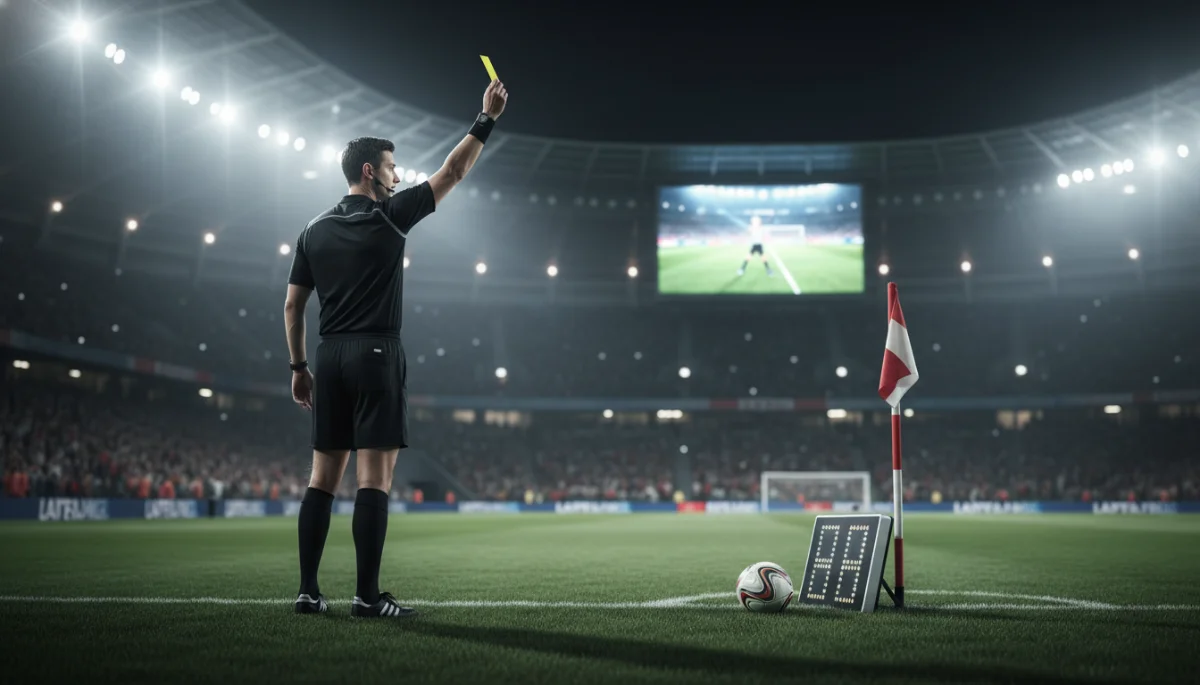
Slow restarts have long frustrated supporters and opponents. The 2026 tournament is expected to address that with a visible five-second countdown for certain restarts, including throw-ins and goal kicks.
Referees will signal the count, and the team in possession must restart before time expires.
If the Clock Runs Out
- A delayed throw-in can be given to the other team
- A late goal kick can turn into a corner for the opposition
- Late-match stalling becomes much riskier
That second outcome is especially severe. Giving away a corner instead of a goal kick can quickly change momentum and create a scoring chance.
Substitutions Will Need to Happen Faster
Substitution routines are also being tightened. Once the board goes up, the outgoing player will have only 10 seconds to leave the field, and they must exit at the nearest boundary point.
The new approach is meant to stop players from slowly crossing the pitch or dragging out the process while their team protects a lead.
Possible Consequences of Delay
If the player being replaced does not exit on time, the substitute may have to wait before entering. In some situations, that can leave the team briefly short-handed after play resumes.
Referees should still allow flexibility for injuries, security problems, or safety concerns, but ordinary delay is likely to be handled more firmly.
Medical Delays Will Be Harder to Use Tactically
One-minute off-field treatment rules are also part of the shift. If medical staff come on for an outfield player, that player will generally need to leave the field for one minute after the restart.
The point is to reduce tactical stoppages disguised as minor injuries. It also pushes teams to think carefully before asking for treatment that is not truly necessary.
When the Rule Should Not Apply
- Goalkeeper injuries
- Collisions between a goalkeeper and an outfield player
- Collisions between teammates
- Serious injuries, including possible concussions or head trauma
- A player about to take a penalty
These exceptions keep player safety ahead of game management while still limiting delay tactics.
VAR Will Reach More Situations
Video review is set to have a broader role than before. The 2026 World Cup is expected to allow VAR in more narrowly defined situations where clear errors need fixing quickly.
Examples of New Review Areas
VAR may now help with mistaken identity, such as when the wrong player is booked or sent off. It may also be able to correct clearly wrong second-yellow decisions, which have usually sat outside normal review coverage.
In some cases, VAR could intervene on obviously incorrect corner-kick awards if the correction can be made without major delay.
Another likely use is fouls committed before a free kick or corner is taken. If an attacker commits an offense before the ball is in play, the referee may be sent to the monitor so the correct restart and discipline can be applied.
Water Breaks Will Be Built Into Every Match
Because the tournament will be played across the United States, Mexico, and Canada, heat will be a concern in some venues. Each match is expected to include hydration breaks in both halves.
The break should last about three minutes and will likely come around the midpoint of each half, though referees can adjust the timing if another stoppage makes more sense.
Goalkeeper Injuries Will Not Create Free Coaching Time
Another small but important change addresses stoppages caused by goalkeeper treatment. Teams will not be allowed to use those moments as a hidden timeout for coaching instructions.
That means an injury pause should stay focused on medical care, not become a chance for players to gather around the bench for tactical direction.
What Teams Will Need to Adjust
The biggest challenge for teams may be discipline. Players who argue, stall, or use confrontational tactics could face faster and harsher punishment than they are used to.
Coaches will likely spend time before the tournament drilling the new standards so players do not lose games through avoidable mistakes.
Practical Areas to Watch
- Faster restarts after throw-ins and goal kicks
- Cleaner substitution habits
- Less visible delay during treatment
- Stronger caution during angry confrontations
- Tighter marking and less grappling on set pieces
Set pieces may also draw more attention because VAR can now help correct some foul-related errors before the ball is put into play.
What Fans Are Likely to Notice
Supporters may see more hand signals from referees, quicker restart pressure, and more immediate punishment for stalling. Some decisions that once passed without comment could now draw a card or a change in possession.
The game may feel a little stricter at first, but the overall aim is to keep play moving and reduce avoidable interruptions.
For viewers, the 2026 tournament could look familiar in shape but different in rhythm, with more accountability for both players and officials.