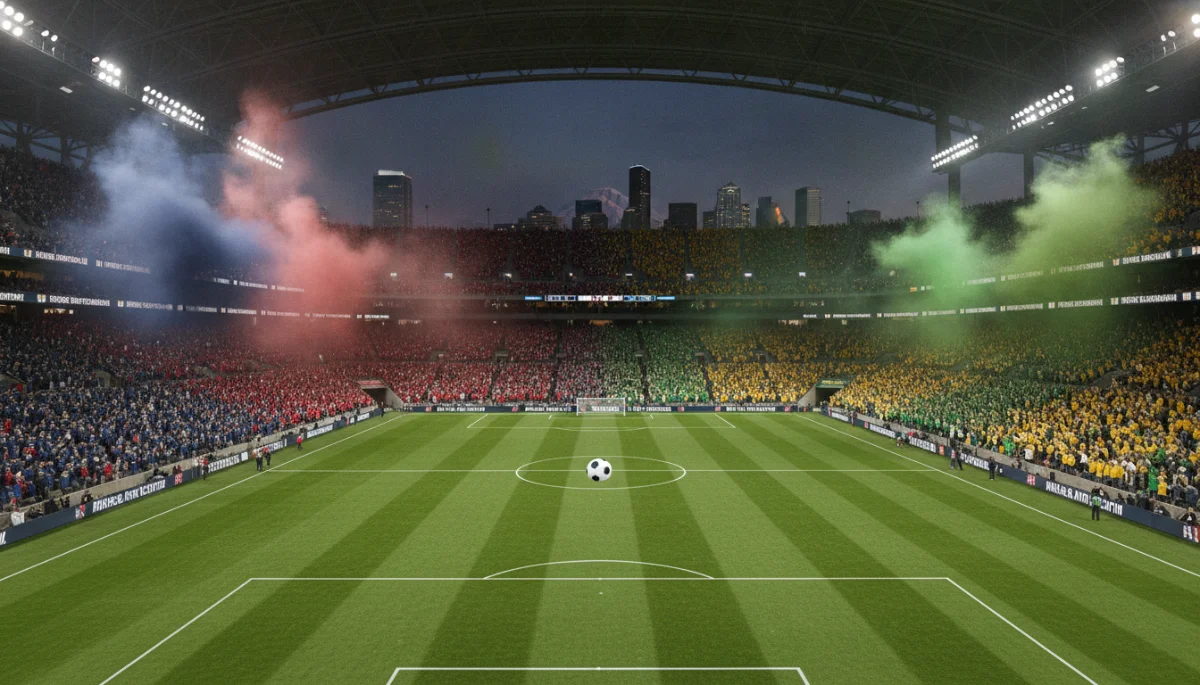
World Cup 2026 | Group D, Matchday 2 — Friday, June 19, 2026 | 3:00 p.m. ET | Lumen Field, Seattle | TSN / CTV
The United States and Australia enter Seattle with matching momentum and a place in the round of 32 within reach. A win would put either side through and could shape the path that Canadian fans are watching so closely.
Why this match matters
This is not just another group game. Both teams opened with emphatic victories, and the winner in Seattle will leave with control of Group D and a direct line into the knockout stage. Australia already showed against Türkiye that it can survive long stretches without the ball, while the U.S. announced itself with a dominant 4-1 result over Paraguay.
For viewers in Canada, the appeal goes beyond simple rivalry. Seattle is close enough geographically and emotionally to feel like part of the regional tournament picture, and the possibility of a later meeting with either side gives this contest extra relevance.
What each team brought from opening day
- The U.S. used pace, pressure, and cleaner finishing to overwhelm Paraguay and claim the largest World Cup winning margin in its history.
- Folarin Balogun struck twice in the first half, while Gio Reyna added a standout goal after a long passing move.
- Australia produced a more restrained but highly effective result, beating Türkiye 2-0 in Vancouver despite heavy pressure and limited possession.
- Patrick Beach delivered a major breakout performance for the Socceroos, making eight saves in the clean-sheet win.
The biggest question: Christian Pulisic
All week, the central injury storyline has been Christian Pulisic. He started brightly against Paraguay, helped set the tone for the U.S. attack, and then left at halftime with a calf problem. Mauricio Pochettino has not given a firm public answer on whether the captain will play, saying the team would continue to assess him with the medical staff.
If Pulisic is limited or unavailable, the Americans still have options. Tim Weah, Brenden Aaronson, Gio Reyna, and Alex Zendejas can all fill attacking roles, which gives the U.S. some flexibility even if the lineup changes late.
There is also a physical subplot. The last time these teams met, Australia’s intensity contributed to Pulisic’s injury in Denver, and Pochettino has already made clear that his team must stay aggressive without drifting over the line.
Key tactical battles
| Area | United States | Australia |
|---|---|---|
| Possession | Likely to hold the ball and press high | Happy to defend deep and break quickly |
| Attack | Balogun, Reyna, McKennie, and possibly Pulisic create pressure through the middle | Irankunda and Yengi offer speed and directness on transition |
| Defending | Must stay alert against counters after losing possession | Will try to keep shape and deny central space |
| Game state | Comfortable if the first goal arrives early | Dangerous if the match remains tight into the final half hour |
The U.S. path to control
The Americans looked confident in their opener because their pressing created turnovers and their movement created easy passing lanes. If that same pattern shows up in Seattle, Australia may spend long stretches pinned back near its own box. The key for the U.S. is patience: forcing the breakthrough without losing structure.
Australia’s best route
The Socceroos do not need to dominate the ball to cause problems. Their best chance is to absorb pressure, keep the game compact, and attack space once the U.S. commits players forward. Nestory Irankunda’s pace and Kusini Yengi’s finishing give them enough threat to punish a loose moment.
What Seattle adds to the picture
Lumen Field is expected to lean heavily toward the U.S., and the atmosphere should feel like a home-field test for Australia from the opening whistle. The venue has already been framed as a major World Cup stage, and the U.S. enters with a strong recent record there.
Cristian Roldan also gives the hosts a local connection, since the Seattle Sounders midfielder is part of the squad. That detail matters in a stadium where the crowd knows how to turn noise into pressure.
How Canadian viewers can watch
Canadian coverage is set for TSN and CTV in English, with RDS providing French-language broadcast options. Streaming is also available through the TSN and CTV digital platforms, with kickoff scheduled for 3:00 p.m. ET / 12:00 p.m. PT.
For fans north of the border, this is a useful scouting opportunity as much as a major group-stage match. The U.S. is a likely benchmark opponent in the region, and Australia’s compact defensive approach could also offer a blueprint for how to frustrate a favored side.
Prediction
Australia has already shown enough organization to make life difficult, but the U.S. attack looks too varied, too deep, and too comfortable in possession to be held down for 90 minutes. If Pulisic plays, that only increases the pressure on the Socceroos; if he does not, the Americans still have enough quality to create chances and finish them.
Projected score: United States 2, Australia 0
Balogun looks most likely to score again, and a cagey first half could still give way to a stronger American finish after the interval. That would secure qualification and keep the bracket picture simple for everyone watching from Canada.